Rules
Patient Outreach Data: What US Hospital Campaigns Actually Return
Patient outreach data for US hospitals: response rates, no-show reduction, re-engagement cost, language-access spend, and reporting benchmarks.
What to take away
- Patient outreach data, hospital patient outreach metrics, and patient engagement statistics should end in completed visits, closed care gaps, and cost per re-engaged patient.
- No-show reduction is a change in percentage points against your own scheduling baseline, not a vendor average.
- Language-access spend is a required cost under Section 1557 and a campaign line item.
- Patient experience scores from HCAHPS and CAHPS are context, not a substitute for patient outreach ROI.
- One reporting view for consent, source, and visit completion keeps the numbers auditable.
The Return That US Hospital Campaigns Report
Hospital outreach campaigns return three measurable things: completed appointments, closed preventive gaps, and documented patient experience. The dollar return depends on service line margin, payer mix, and capacity.
A campaign that fills a primary care slot has a different value than one that fills a high-acuity surgical consult. That difference belongs in your patient outreach data, not in a generic industry average.
Patient Outreach Data Table for Benchmarking
Use this table to define terms before comparing vendors or quarters.
Patient Outreach Data Table
| Metric | Formula | Source system |
|---|---|---|
| Response rate | Replies or bookings divided by contacted patients | CRM, call tracking |
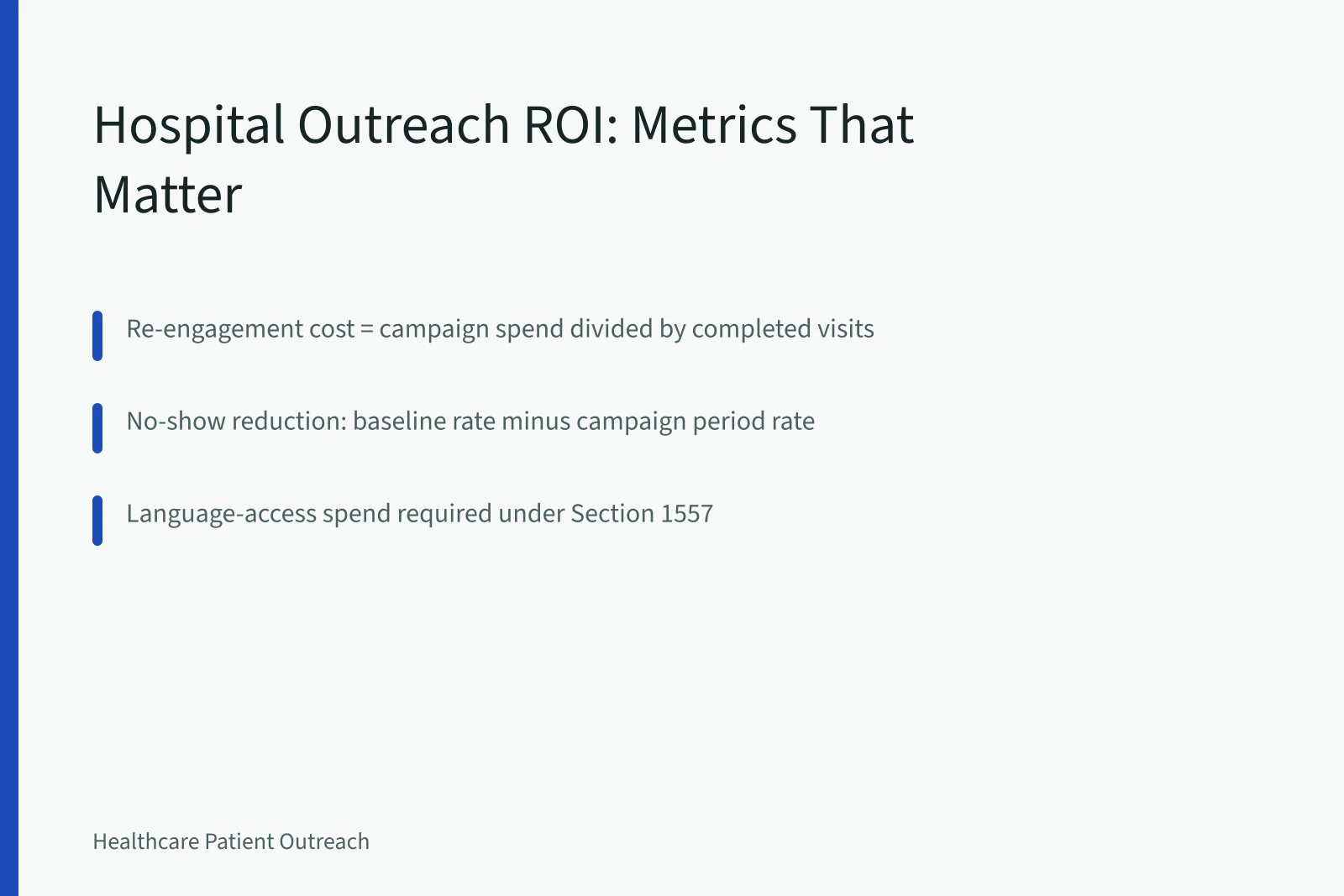
| Re-engagement cost | Campaign spend divided by completed visits | Finance, EHR |
| No-show reduction | Baseline no-show rate minus campaign period rate | Scheduling, EHR |
| Language-access spend | Translation, interpretation, and tagline cost divided by LEP patients reached | Compliance, vendor invoices |
| Experience link | HCAHPS or CAHPS domain score beside outreach cohort | Survey vendor, CMS |
Without shared definitions, two teams can report different response rates from the same campaign. Patient outreach benchmarks should come from your own baseline and payer mix.
Response Rates and Re-Engagement Cost
Response rates vary by channel, list age, and clinical condition. Email may get low single-digit replies, while phone and text may get higher engagement for overdue screenings. CMS publishes HCAHPS results by hospital, including response rates and top-box scores.
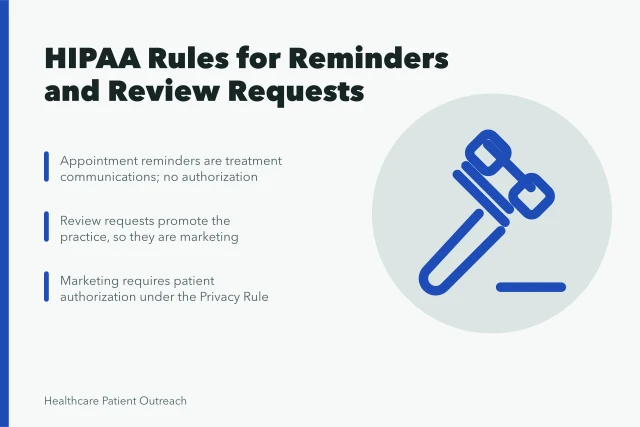
Outreach reply rates are not standardized. Build your own denominator and count only patients with a valid consent basis. The HIPAA Privacy Rule permits uses and disclosures for treatment, payment, and health care operations, so outreach consent must match the purpose.
No-Show Reduction and Scheduling Data
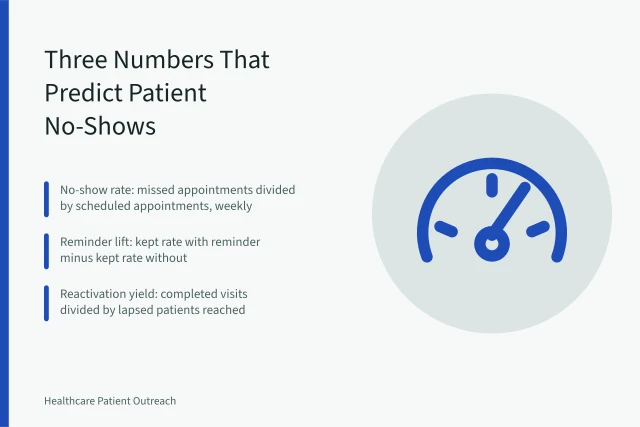
No-show reduction is the most direct operational return. Track the baseline for at least 8 to 12 weeks before launch. Then compare the same weekday, provider, and appointment type.
A 3 percentage point drop may sound small, but on 1,000 appointments it means 30 additional completed visits. Do not claim reduction if the schedule changed. Document reminders, transportation help, and waitlist fills.
Language-Access Spend in US Hospitals
Language access has a cost. Multilingual patient outreach under Section 1557 requires translated notices, taglines, and qualified interpreters. Hospitals in Miami, Los Angeles, and Houston often carry higher spend because their limited-English-proficiency populations are larger and more diverse.
Budget for translation per language, interpreter minutes, and staff training. Track spend per LEP patient reached, not just total spend. This is where outreach data meets civil rights compliance.
Example: One-Page Outreach Scorecard
A one-page scorecard keeps campaigns comparable. Build it with these steps:
One-Page Outreach Scorecard
- Define the cohortcondition, language, payer, and last visit date.
- Lock the baselineno-show rate, visit volume, and cost per visit for 12 weeks.
- Run the campaignrecord consent source, channel, messages, and staff hours.
- Reconcile at 30 and 90 dayscompleted visits, no-shows, and language-access spend.
- Publish one pageresponse rate, re-engagement cost, no-show change, and experience score.
This scorecard makes vendor claims auditable. If a vendor reports a 20 percent response rate, ask for the denominator.
Experience Scores and Outreach Reporting
Patient experience surveys and outreach data answer different questions. HCAHPS measures discharge experience, not campaign response. AHRQ CAHPS provides survey instruments and question sets for patient experience.
Use those scores to check whether outreach improves access or creates friction. A rise in appointment volume with a fall in experience scores signals a capacity problem. That is why healthcare outreach reporting should sit beside service capacity data.
Boston, Academic Centers, and Buying-Cycle Costs
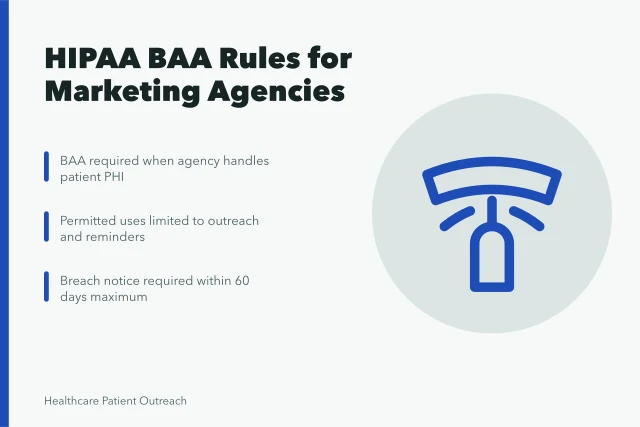
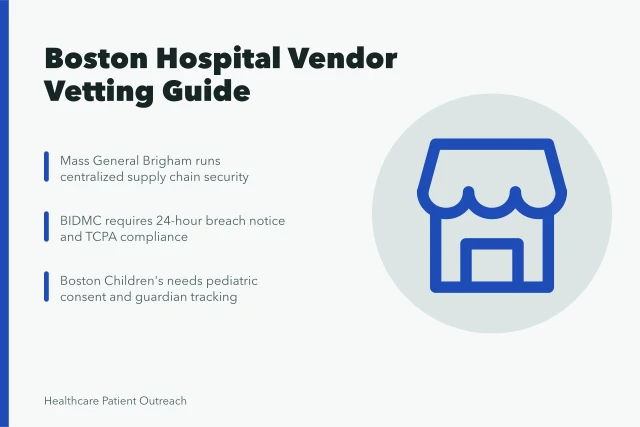
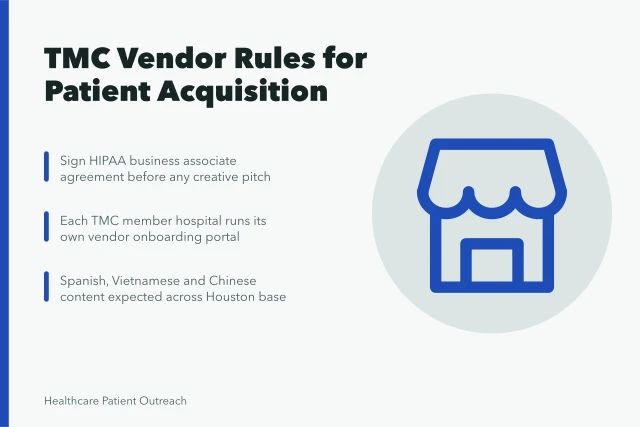
Academic medical centers add cost and time. For vendors, the Boston patient outreach buying cycle adds legal review and pilot delays that change return timing. Mass General Brigham, Beth Israel Deaconess Medical Center, and Boston Children's use BAA terms, security reviews, and dense academic competition. Separate compliance cost from media cost when you model patient outreach ROI.
Reading Vendor Claims Sceptically
Reading medical practice marketing sceptically means checking service capacity, ethical outreach, and whether reported outcomes reconcile. A vendor may report bookings, but bookings are not completed visits. Ask for no-show rates, consent basis, and language-access costs. If the numbers do not tie to the EHR or scheduling system, treat them as marketing.
Connecting Outreach Data to 2027 Strategy
A healthcare marketing strategy for 2027 ties patient needs, service capacity, governed data, and measured outcomes to these numbers. Outreach data should feed service line planning, not just campaign reports. When a campaign shows high demand but low capacity, the answer is operational, not more media spend.